How Cabinetry and Millwork Shops Use Builtie: Sell at Framing, Install at Finishing
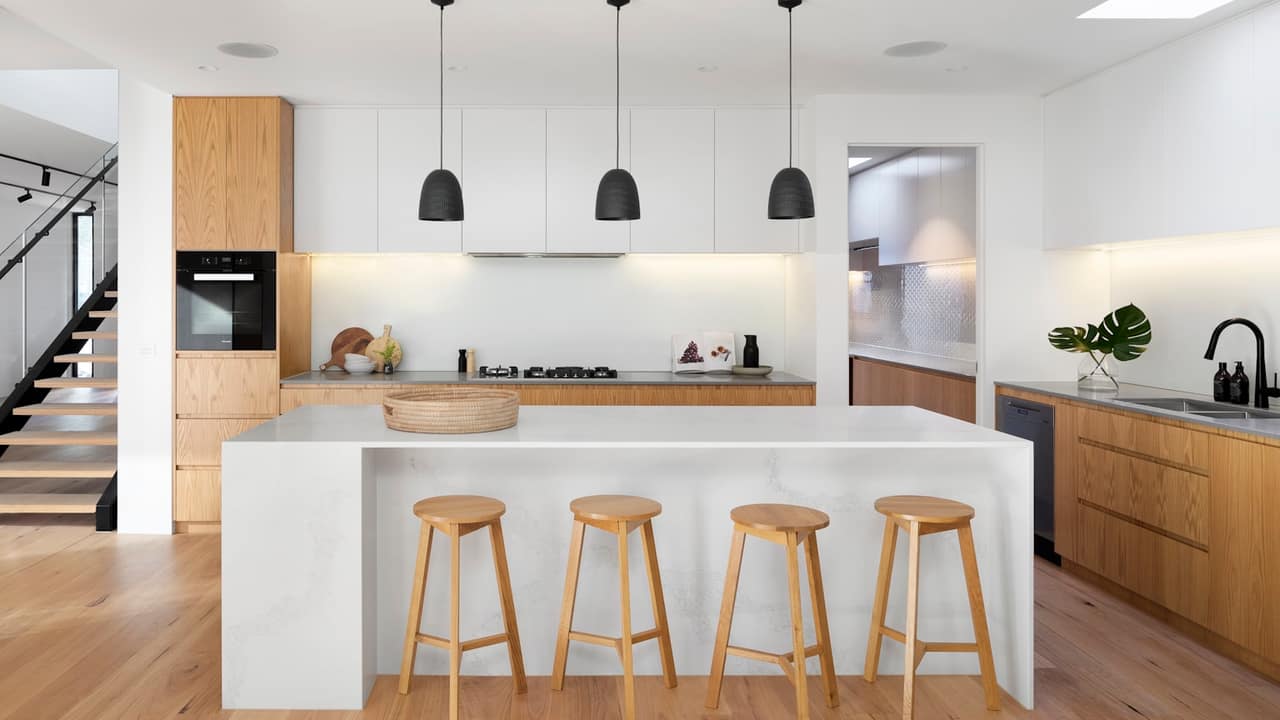
Your foreman is scrolling Instagram at 6:45am and finds a kitchen a local builder posted last night. Walnut, flat panel, waterfall island. Somebody sold that kitchen, and it was not you. It was awarded when the house was studs and subfloor, because millwork carries eight to twelve week lead times and the builder needs shop drawings long before drywall. Cabinetry goes in at roughly 80 to 90 percent of a build and gets decided at roughly 30 to 40 percent. By the time it looks like a kitchen, it is somebody else's kitchen. Here is how cabinetry and millwork shops use Builtie to show up at framing.
Two personas, one signature
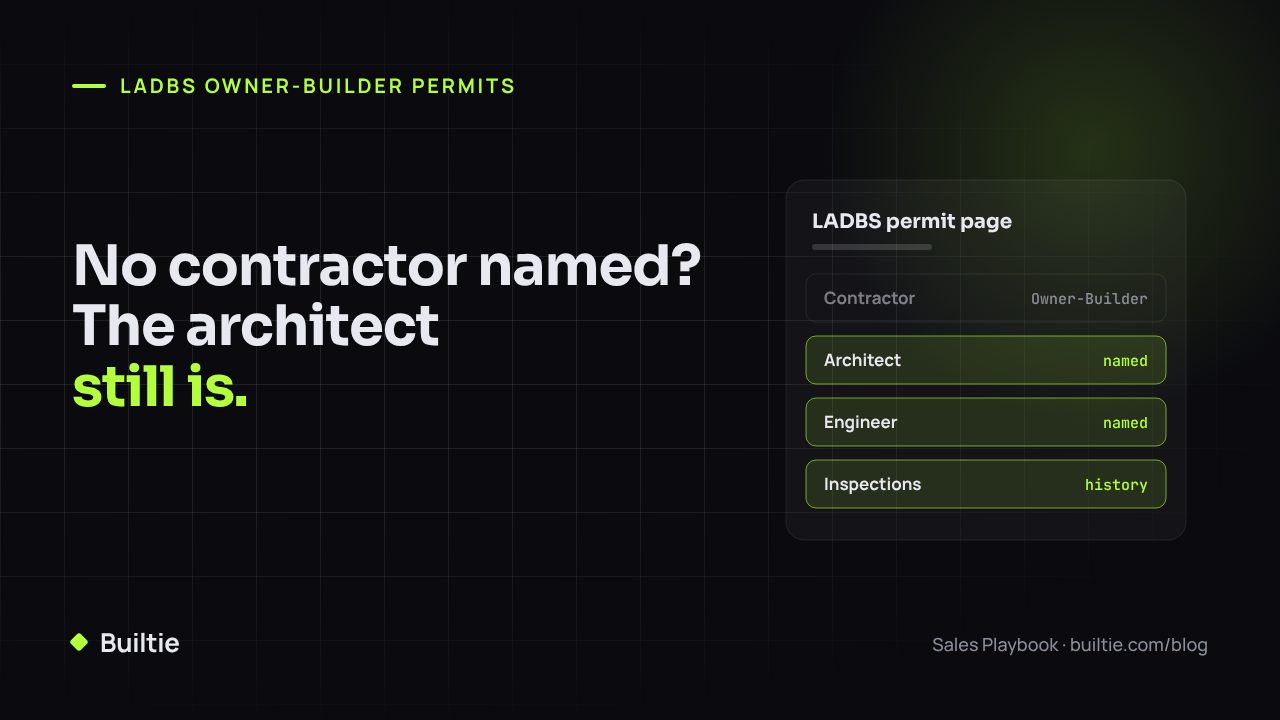
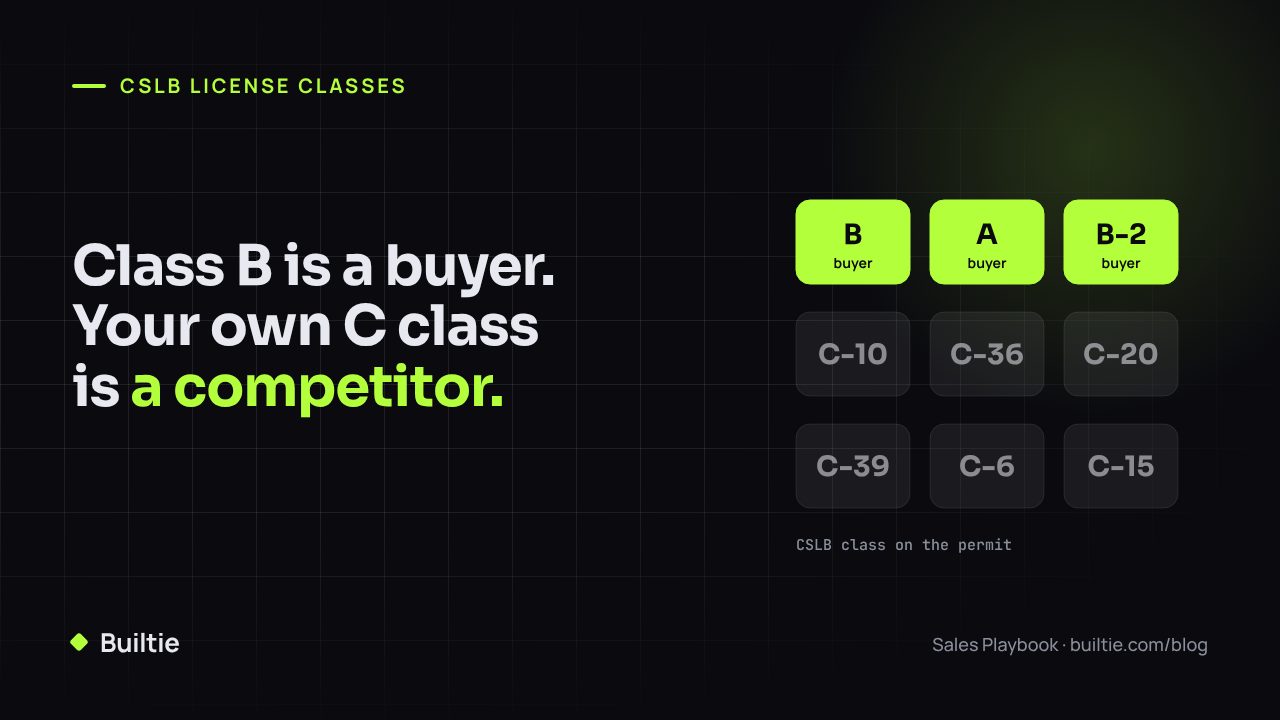
On a custom home the interior or kitchen designer very often picks the shop and the builder signs off. On a spec build or a multiplex conversion the builder or developer picks directly. On a renovation the homeowner picks, usually on the designer's or the GC's say-so. You need to know who is holding the pen on each job. Builtie's profile lets a shop name the personas it sells to, and the feed and the outreach follow that profile: ask for designers and custom builders and you will not be shown civil contractors.
The feed reads public permits and planning records, and on Growth adds builder and designer posts. It classifies each project, matches it to cabinetry scope (a custom home, a whole-home renovation, a multiplex with four kitchens) and shows the ones in your territory with the stage and the buyer attached.
Getting leads: framing is the whole game
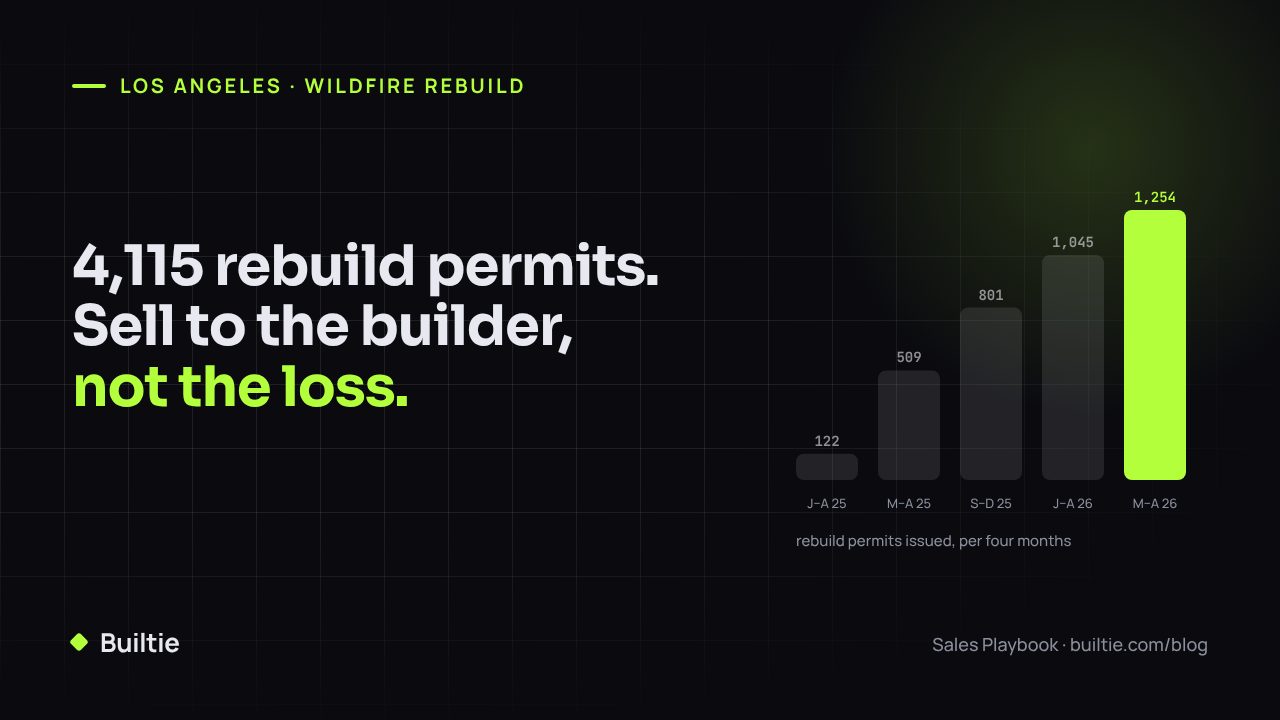
Builtie stamps every project with a stage. For cabinetry the buy window is framing: structure up, interiors being specified, finish packages being priced. A project at sub-trades usually has a shop already; one at finishing is being installed by someone else. The field team checks the projects that matter in person, and every stage carries the date it was last confirmed.
Social posts matter here in one way. A finished kitchen on a builder's feed is not a lead. It is a receipt: proof the job was awarded months ago, and that this builder is worth knowing. Roughly three in four cabinetry-relevant social projects are already complete. On Growth and Custom, Builtie uses those posts to confirm who is active and to personalize the approach, and uses permits at framing to decide which project to pitch. Posts tell you who. Permits tell you when.
Winning clients: talk about their kitchen, not your shop
For each qualified project Builtie identifies the builder, developer, designer or owner and the person who makes the call, with email, phone and LinkedIn where they can be verified. On Growth it runs personalized LinkedIn and email outreach under your name, about their project. "You're framing the custom on Bessborough; we're building two kitchens for a designer in Leaside on similar plans and can have shop drawings inside three weeks of your layout." A designer answers that. Nobody answers "Need cabinets?" Replies come back classified by intent into your inbox and Action Plan, and the automation stops the moment a person replies. The conversation is yours.
Closing: whoever's shop drawings land first
Cabinetry closes when your drawings hit the builder's desk first. Builtie's job is to get you the layout early: a site visit from today's route, a conversation with the designer while selections are open, drawings back inside the builder's schedule. Deliver one kitchen on time and you are in line for the builder's next one. Nobody shops for a new cabinet shop while the current one keeps showing up.
Week one
- Set your profile: cabinetry and millwork, the personas you sell to, your size range, your territory.
- Review the feed: projects at framing with kitchen and millwork scope, buyer attached.
- Approve the outreach drafts. They go out under your name.
- Work the Action Plan: replies, today's route, designers and builders to call.
- Make the designers and builders who keep turning up your accounts.
How Builtie fits
Starter covers up to 20 projects a month with the buyer identified and outreach done for you, at $79 per month per seat, with a 7-day free trial, cancel any time before it ends. Growth raises that to 50 projects a month at $99 per month per seat and adds the events and exhibitions dashboard and social media signals, where builders and designers announce new work before it goes public. Coverage runs across North America, with the deepest data in Toronto and the Greater Toronto Area (GTA), so ask for live sample projects in your own city.
Know the projects. Reach the decision makers. See the kitchens being specified in your area at builtie.com.
Frequently asked questions
When is cabinetry awarded on a new build?
Around framing, roughly a third of the way through the build. Millwork carries eight to twelve week lead times, so the shop is chosen and the kitchen specified while the structure goes up, months before installation at the finishing stage.
Who chooses the cabinetry shop?
On custom homes, the interior or kitchen designer very often makes the call and the builder signs it; on spec builds and multiplex conversions, the builder or developer chooses directly. Builtie's profile lets a shop target both personas and identifies which one applies on each project.
Why does Builtie warn against using finished-kitchen posts as leads?
Because a post showing installed millwork proves the contract was awarded months earlier. On Growth and Custom, Builtie uses those posts to confirm which builders and designers are active and to personalize the approach, and uses permits at framing to decide which project to pitch.
Builtie Team
Intelligence and outreach for North American construction trades.