
Construction Leads for Roofing Contractors
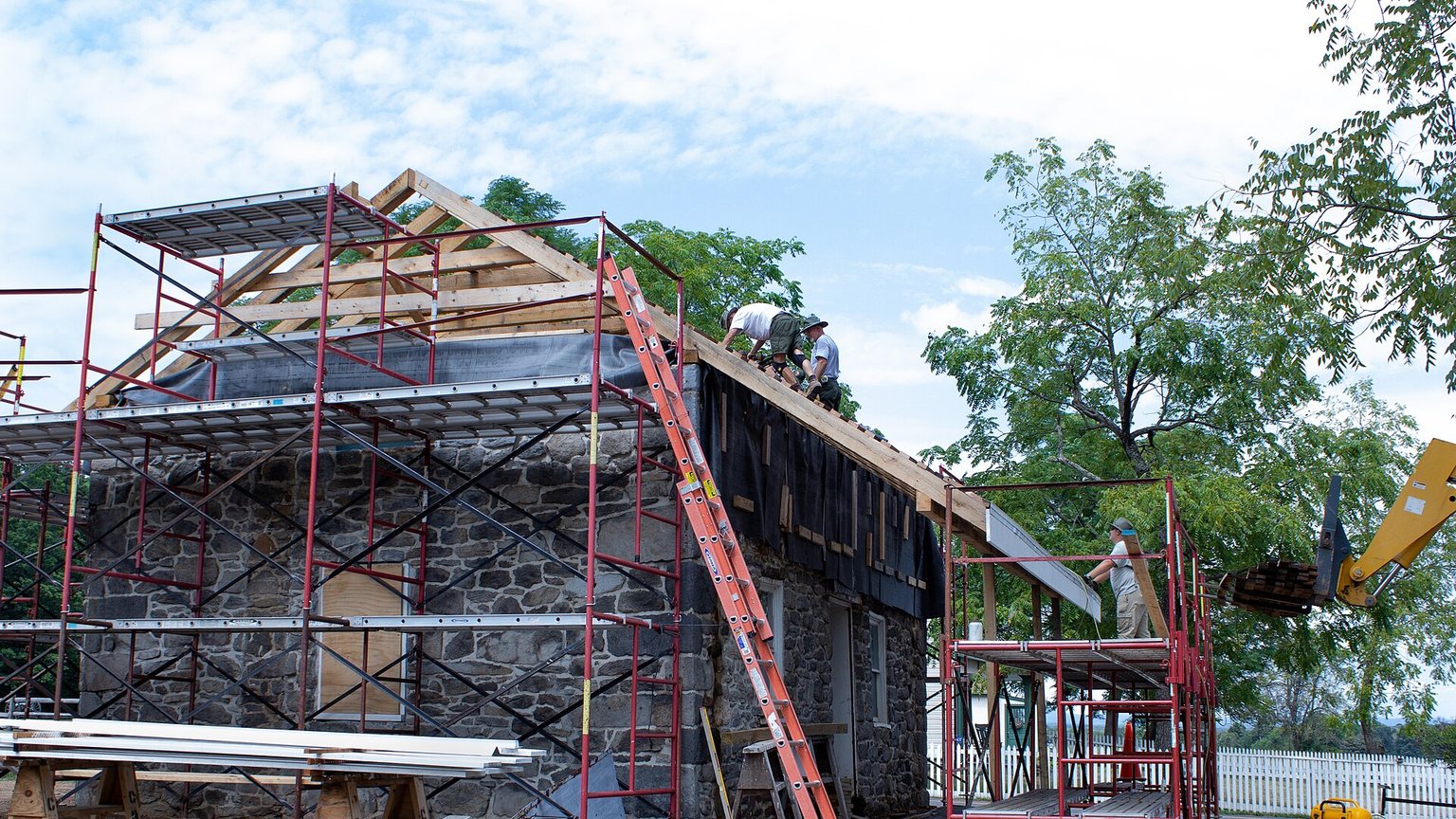
Roofing is awarded in the weeks around framing. Once a roof deck is visible from the street the package is almost always committed, so the roofing contractors who win new construction are the ones reaching the builder while the walls are still going up. Builtie helps roofers get there in time: it scores permitted projects in its US and Canadian markets against roofing’s award window, so jobs nearing framing rise to the top, and names the builder, developer or general contractor with a person there to contact.
The same four steps, whether the buyer is a builder, a designer, an owner or a company you want to acquire.
Where new-construction roofing work comes from
Reroofing a lived-in house is a homeowner sale. New-construction roofing is a builder sale, and it comes from a short list of project types that a permit record makes visible weeks before anyone is on the roof:
- New single-family and custom homes. One roof each, but a builder running four or five houses a year is four or five roofs from one relationship, usually with the same detail package repeated.
- Townhouse and stacked-town blocks. A single permit can carry a dozen roofs with identical assemblies. These are the jobs where a crew can stay on one site for weeks.
- Additions and second-storey builds. A rear or third-storey addition means tying new roof into old, which is skilled work that a general contractor would rather buy than self-perform.
- Low-slope and flat commercial. Retail, industrial and institutional projects buy membrane roofing on a completely different schedule and usually through the general contractor rather than the owner.
All four are visible in permit and planning records long before the roof deck exists. That is the whole opportunity: the paperwork moves months ahead of the shingles.
When the roofing package is actually bought
Where roofing sits on a residential build. Click a stage to see what is happening to the roofing decision at that point.
The practical rule for roofing is that the buy window opens when the framing permit is active and closes when the frame tops out. That is a matter of weeks on a house and a couple of months on a townhouse block, which is why timing beats price on this trade more often than roofers expect.
Who actually awards the roof
- Custom home builders. They pick a roofer they trust and reuse them. Winning one builder is worth more than winning one roof, and they decide early because the deck cannot be left exposed.
- Small developers on multi-unit sites. Townhouse and multiplex work where one award covers many identical roofs. They buy on crew size and schedule reliability more than on unit price.
- Renovation general contractors. The buyer on additions and dormers. They award per project and are the most open to a new roofing sub, especially one who can handle a tie-in without callbacks.
- Commercial general contractors. On low-slope work the GC holds the roofing package and buys against a specification. Getting on their bid list is a relationship built before the tender, not during it.
What separates a roofing lead from an address
Most lists sold as construction leads are addresses pulled from a public feed and resold to whoever pays. An address tells you something is happening. It does not tell you whether the roof is still open, what is going on it, or who signs for it. A lead worth working carries four things:
- The project and its roof. New build, addition or block of towns, how many squares roughly, pitched or low-slope, simple gable or a cut-up hip with dormers and valleys.
- The stage. Foundation, framing, or past it. For roofing this single field decides whether the lead is worth a call today or worth a note for next quarter.
- The person who buys the roof. Not the permit applicant or the numbered company, but the builder or project manager who awards the package, with an email, a phone number and a LinkedIn profile where they can be verified.
- What else that builder has going. A builder with three active permits is a relationship worth pricing sharply for. A one-off owner-builder is a single job.
Builtie tracks more than 225,000 permits and 70,167 companies across North America, with 19,036 of those companies carrying identified decision makers. That is the difference between a list of roofs and a list of buyers.
A message a builder answers
Early outreach only works if it proves you looked at the project rather than the postal code. Written to a builder whose framing permit went active last week:
Hi Dan, saw the framing permit go active on the Sixteenth Line build. Guessing the roof deck is going to want covering in about three weeks, which is usually when the roofing quotes land. We are a five-crew shop doing mostly custom homes in the area and can price it off your drawings this week if it is still open.— Illustrative sample outreach message, Builtie
It names the project, names the decision the builder is about to make, and offers something concrete. There is no company boilerplate and no request for a meeting. That is the shape of a first message that gets a reply on a trade where the buyer is busy and the window is short.
How Builtie works for roofing contractors
Builtie monitors construction activity across North America, with its deepest coverage in Toronto and the Greater Toronto Area, and classifies every project by type, value and build stage. You set your trade, your territory and the project types you want, and the feed returns the matches with the buyer identified: the builder, developer or general contractor behind the project, with contact details verified where they can be. The outreach runs from your own accounts, written from the project record, so the first message names the job rather than the industry.
Builtie plans start at $79 per month per seat for 20 projects a month, and $99 for 50. Growth adds LinkedIn and email outreach you run from the platform; Starter does not include Outreach. Done-for-you — where Builtie's team runs the content, campaigns and replies for you — is the Custom plan. There is a 7-day free trial with 10 projects so you can see your own territory before paying.
Which plan fits you?
Starter, $79 per seat per month (CAD). 20 matched projects a month, which is $3.95 for a fully worked project — the decision maker, their verified email, phone and LinkedIn, the site context and the opening script all included in the one credit. Credits reset each month, and you can top up with a credit pack any time. Sourcing that by hand runs about twenty minutes a project, so the plan buys back roughly seven hours a month. Pick it if you already have someone sending the messages and what you are short of is a qualified list. It does not include Outreach.
Growth, $99 per seat per month (CAD). Twenty dollars more buys two and a half times the projects — 50 a month, $1.98 each — plus the entire outreach layer: LinkedIn and email sequences, campaigns, the unified inbox, events and social signals. Anyone opening more than 20 projects a month is better off here on volume alone, before counting the ten to fifteen hours a week that automated follow-up gives back. Pick it if someone on your team will log in and run it.
Done-For-You, the Custom plan, from CAD $1,500 a month. Pick it when the honest answer to “who is going to run this?” is nobody. Builtie's team writes the content, runs your LinkedIn, Instagram and email, answers the comments and DMs, builds and manages the campaigns, A/B tests the messaging, analyzes your followers and your competitors, and hands you the conversations. It sits on top of a Growth seat and is quoted against your trade, territory and channels. See everything Done-For-You covers, or compare all three on the pricing page.
Frequently asked questions
When should a roofing contractor contact a builder about a new project?
While the framing permit is active and before the frame tops out. Roof assembly and delivery dates are settled during framing because the deck cannot be left open, so a quote that arrives after the frame is complete is usually a quote against a decision that has already been made.
Do these leads cover commercial low-slope roofing as well as residential?
Yes. The feed includes commercial and institutional projects where the general contractor holds the roofing package, alongside new houses, townhouse blocks and additions. You choose which project types belong in your feed.
How do I know a roofing lead is not already awarded?
Every project carries its current build stage. Roofing is bought around framing, so a project at excavation or foundation is early, a project at framing is open, and a project already at mechanical rough-in is almost certainly committed. The stage is what tells you which pile a project belongs in.
Is this the same as buying shared roofing leads?
No. Shared leads are homeowner enquiries resold to several contractors at once, typically for $40 to $150 each, and every recipient calls the same person. These are project leads on active construction, with the builder identified, and they are not resold as a race.
Can I filter to only the roof types my crews handle?
Yes. You can scope the feed by project type, size and territory, so a shop that only does steep-slope residential is not reading membrane tenders, and a commercial roofer is not reading single-family permits.