
Construction Leads in Calgary and Area
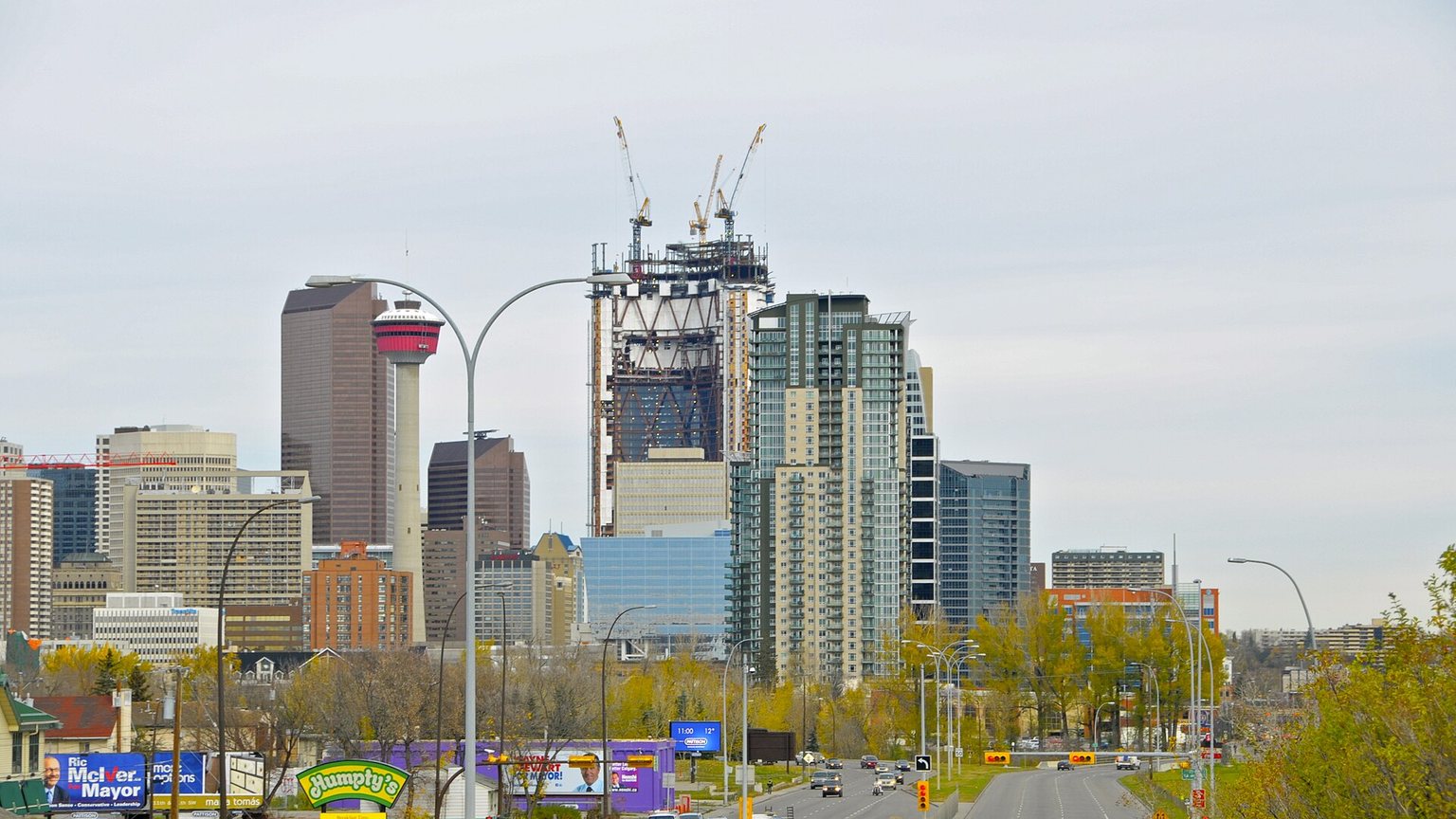
Calgary has been absorbing sustained population growth, and the construction market has responded on several fronts at once: new suburban communities, added units on established lots, downtown conversions and a large industrial pipeline. Each is a different buyer. Calgary is one of the metros Builtie covers: it reads the city's permits, puts the builder behind each project beside a decision maker where one can be identified, and runs the LinkedIn and email follow-up for trades selling there. Its deepest data is still in the Greater Toronto Area, so ask to see live Calgary projects for your trade first.
The same four steps, whether the buyer is a builder, a designer, an owner or a company you want to acquire.
Calgary by the numbers
Calgary among the metros Builtie covers. See all of them on one map.
Permits by year in Calgary. 2026 is a partial year counted to September 4, 2026, so its bar is shorter for that reason rather than a slowdown.
Calgary has issued 61,367 permits since January 2024, counted on September 4, 2026. Single family, garages, secondary suites and commercial are the four largest permit classes, which is the shape of the market this page describes. See how it compares with the other cities Builtie covers.
Four markets in one city
| Segment | What it is | Who buys the trade work |
|---|---|---|
| New community housing | Large suburban subdivisions | Volume builders, buying on repeatable scope and price |
| Infill and added units | More units on established lots after citywide rezoning | Small builders and owners, buying on flexibility |
| Downtown conversion | Office buildings converted to residential | General contractors on complex, technical scopes |
| Industrial and logistics | Warehousing and distribution | Design-build contractors and developers |
A trade contractor who treats these as one market will write one message and get one response rate. They behave differently on price, on schedule and on who decides.
What changed on established lots
Calgary moved to allow more housing types on lots that previously held a single house, and separately made secondary suites far easier to approve than they once were. For trades, that turns a large stock of ordinary residential lots into potential multi-unit work: extra kitchens, extra bathrooms, separate entrances, upgraded electrical service, fire separation. It is small work per property and large work in aggregate, and it is visible in the permit record.
Downtown conversion is a specialist market
Converting an office building to residential is one of the most technically demanding project types a trade can work on. Plumbing stacks have to be added where none existed, mechanical systems are rebuilt for suites rather than floors, windows and envelope frequently need work, and everything happens inside an existing structure. The contractors who win this work are the ones the general contractor already believes can handle it, which puts the premium on being known rather than on being cheap.
The order matters: choosing the segment first is what keeps the list short enough to work properly.
Industrial work rewards early contact most
Warehouse and distribution projects are typically design-build, move quickly once they start, and are decided by a small group of people. There is often no tender for a trade to answer. Being known to the design-build contractor before the project starts is close to the only route in, which makes the permit and planning record more valuable here than in almost any other segment.
Builtie covers North America and its deepest project and contact density is in Toronto and the Greater Toronto Area, because permit data quality is decided by what each municipality publishes. Before you commit to any provider, ours included, ask to see live sample projects in your own city.
Builtie plans start at $79 per month per seat for 20 projects a month, and $99 for 50. Growth adds LinkedIn and email outreach you run from the platform; Starter does not include Outreach. Done-for-you — where Builtie's team runs the content, campaigns and replies for you — is the Custom plan. There is a 7-day free trial with 10 projects so you can see your own territory before paying.
Which plan fits you?
Starter, $79 per seat per month (CAD). 20 matched projects a month, which is $3.95 for a fully worked project — the decision maker, their verified email, phone and LinkedIn, the site context and the opening script all included in the one credit. Credits reset each month, and you can top up with a credit pack any time. Sourcing that by hand runs about twenty minutes a project, so the plan buys back roughly seven hours a month. Pick it if you already have someone sending the messages and what you are short of is a qualified list. It does not include Outreach.
Growth, $99 per seat per month (CAD). Twenty dollars more buys two and a half times the projects — 50 a month, $1.98 each — plus the entire outreach layer: LinkedIn and email sequences, campaigns, the unified inbox, events and social signals. Anyone opening more than 20 projects a month is better off here on volume alone, before counting the ten to fifteen hours a week that automated follow-up gives back. Pick it if someone on your team will log in and run it.
Done-For-You, the Custom plan, from CAD $1,500 a month. Pick it when the honest answer to “who is going to run this?” is nobody. Builtie's team writes the content, runs your LinkedIn, Instagram and email, answers the comments and DMs, builds and manages the campaigns, A/B tests the messaging, analyzes your followers and your competitors, and hands you the conversations. It sits on top of a Growth seat and is quoted against your trade, territory and channels. See everything Done-For-You covers, or compare all three on the pricing page.
See also: Building permit lookup: Calgary.
Every trade in Calgary, from excavation to landscaping, with its own count and award window: Calgary construction leads by trade.
Frequently asked questions
What is being built in Calgary right now?
Four broad segments: new suburban community housing, added units and infill on established lots following citywide rezoning, downtown office to residential conversions, and industrial and logistics buildings.
Are secondary suites a real market for trades?
Yes. Adding a suite means an additional kitchen and bathroom, a separate entrance, fire separation and frequently an electrical service upgrade. Individually small, collectively substantial, and visible in the permit record.
Who awards work on a downtown conversion?
The general contractor, usually with a project manager and estimator assembling the trade list. These are technically demanding projects, so trades are chosen on demonstrated capability rather than on price alone.
Does Builtie cover Alberta?
Coverage is North America wide, with the deepest density in Toronto and the Greater Toronto Area. Depth in any given city depends on what that municipality publishes, so ask for live sample projects in your area first.
How do I reach industrial developers?
Early, and directly. Industrial work is frequently design-build with no public tender, so the useful step is being known to the developer and the design-build contractor before the project starts.