
Construction Leads for Mechanical and Sheet Metal Contractors
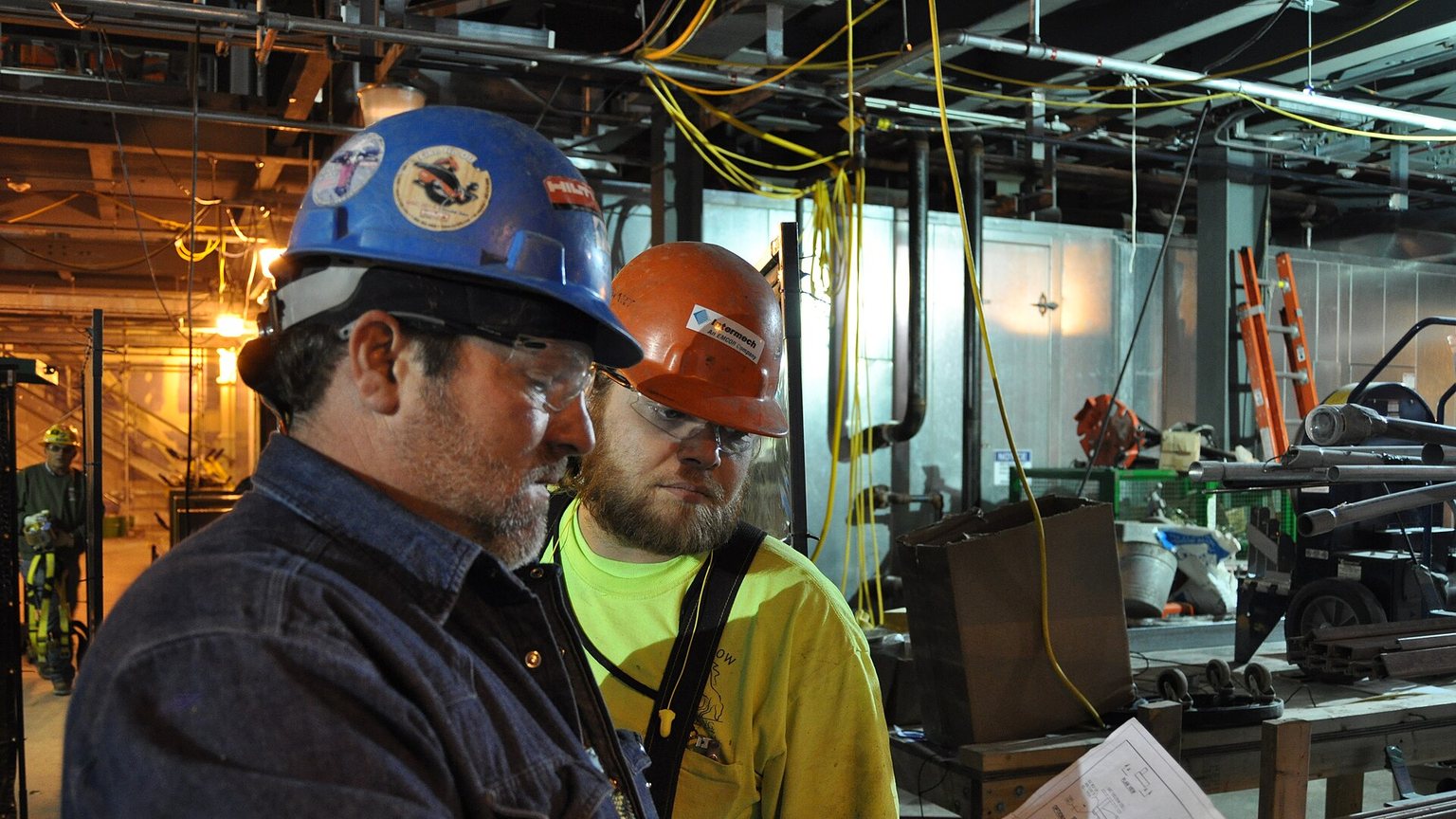
Mechanical work is awarded before rough-in, not during it. Duct layout has to be coordinated with the structure while the frame is open, so the package is priced and committed during framing and the crew that shows up later was chosen months earlier. For mechanical and sheet metal shops that sell to builders and GCs, Builtie tracks projects by type, value and stage and names the estimator or builder who awards the package, so the first conversation happens while the frame is still open.
The same four steps, whether the buyer is a builder, a designer, an owner or a company you want to acquire.
Coordination is what is being bought
On anything larger than a house, the mechanical package is not really bought on duct prices. It is bought on whether the contractor can coordinate with structure, electrical and sprinkler without holding up the ceiling. That work starts while the frame is open, which pulls the award forward into framing and puts a premium on contractors who can produce coordination drawings quickly.
On residential the same logic applies in miniature: the duct runs have to fit the joists, so the decision happens while the joists are still visible.
When the mechanical package is bought
Mechanical and sheet metal on a build. Click a stage to see the state of the package.
Who awards mechanical work
- General contractors. The buyer on commercial and institutional projects, working from an engineered drawing set and a bid list assembled before the tender is public.
- Custom home builders. They buy the combined heating, ventilation and duct package and reuse a contractor who does not create callbacks during the warranty period.
- Developers on multi-unit residential. Repetitive suite layouts, large quantities of identical work, and a schedule that runs floor by floor.
- Mechanical engineers and design-build partners. They specify rather than buy, but a contractor known to the engineer gets involved before the drawings are finished.
What a mechanical lead has to include
- Building type and size. Suite count, floor area, whether the system is central or per-unit, and whether there is a kitchen exhaust or process ventilation scope.
- The stage. Framing is the window on most projects. Rough-in means the package is gone.
- The buyer, by role. On commercial that is an estimator or project manager at the general contractor; on residential it is the builder. A lead naming only a company is half a lead.
- The engineer, where there is one. Because the specification is often written before the contractor is chosen, and being known to the engineer changes what the specification allows.
A message that reads as a coordination offer
Hi Dev, saw the Weston project is framed. If the mechanical is still open we can get coordination drawings back inside two weeks and start rough-in behind your framer. We did a similar four-storey walk-up last year with the same suite layout repeated.— Illustrative sample outreach message, Builtie
Speed of coordination is the promise that matters here, and referencing a comparable building is the fastest way to make it credible.
How Builtie works for mechanical contractors
Builtie classifies projects across North America by type, value and build stage and identifies the companies and people behind each one, so a mechanical or sheet metal contractor can watch for projects arriving at framing and reach the estimator or builder who awards the package with contact details verified where they can be.
Builtie plans start at $79 per month per seat for 20 projects a month, and $99 for 50. Growth adds LinkedIn and email outreach you run from the platform; Starter does not include Outreach. Done-for-you — where Builtie's team runs the content, campaigns and replies for you — is the Custom plan. There is a 7-day free trial with 10 projects so you can see your own territory before paying.
Which plan fits you?
Starter, $79 per seat per month (CAD). 20 matched projects a month, which is $3.95 for a fully worked project — the decision maker, their verified email, phone and LinkedIn, the site context and the opening script all included in the one credit. Credits reset each month, and you can top up with a credit pack any time. Sourcing that by hand runs about twenty minutes a project, so the plan buys back roughly seven hours a month. Pick it if you already have someone sending the messages and what you are short of is a qualified list. It does not include Outreach.
Growth, $99 per seat per month (CAD). Twenty dollars more buys two and a half times the projects — 50 a month, $1.98 each — plus the entire outreach layer: LinkedIn and email sequences, campaigns, the unified inbox, events and social signals. Anyone opening more than 20 projects a month is better off here on volume alone, before counting the ten to fifteen hours a week that automated follow-up gives back. Pick it if someone on your team will log in and run it.
Done-For-You, the Custom plan, from CAD $1,500 a month. Pick it when the honest answer to “who is going to run this?” is nobody. Builtie's team writes the content, runs your LinkedIn, Instagram and email, answers the comments and DMs, builds and manages the campaigns, A/B tests the messaging, analyzes your followers and your competitors, and hands you the conversations. It sits on top of a Growth seat and is quoted against your trade, territory and channels. See everything Done-For-You covers, or compare all three on the pricing page.
Frequently asked questions
When is the mechanical package awarded?
Usually during framing. Duct layouts have to be coordinated with the structure while the frame is open, so the contractor is chosen before rough-in rather than during it.
Do these leads include commercial and multi-unit work?
Yes. Commercial, institutional and multi-unit residential projects are tracked alongside houses, and you can scope the feed to the building types your shop takes.
How do I reach the right person at a general contractor?
By role rather than by switchboard. Builtie identifies people at a company by their function, so you can approach the estimator or project manager who assembles the bid list.
Can I see who the engineer is on a project?
Where the record identifies the design team, it appears with the project. On projects with an engineered mechanical design, being known to the engineer is often more valuable than being known to the contractor.
What does it cost?
Starter is $79 per month per seat for 20 projects a month, Growth is $99 for 50, with LinkedIn and email outreach on Growth and done-for-you on the Custom plan and a 7-day free trial.